
Loading...
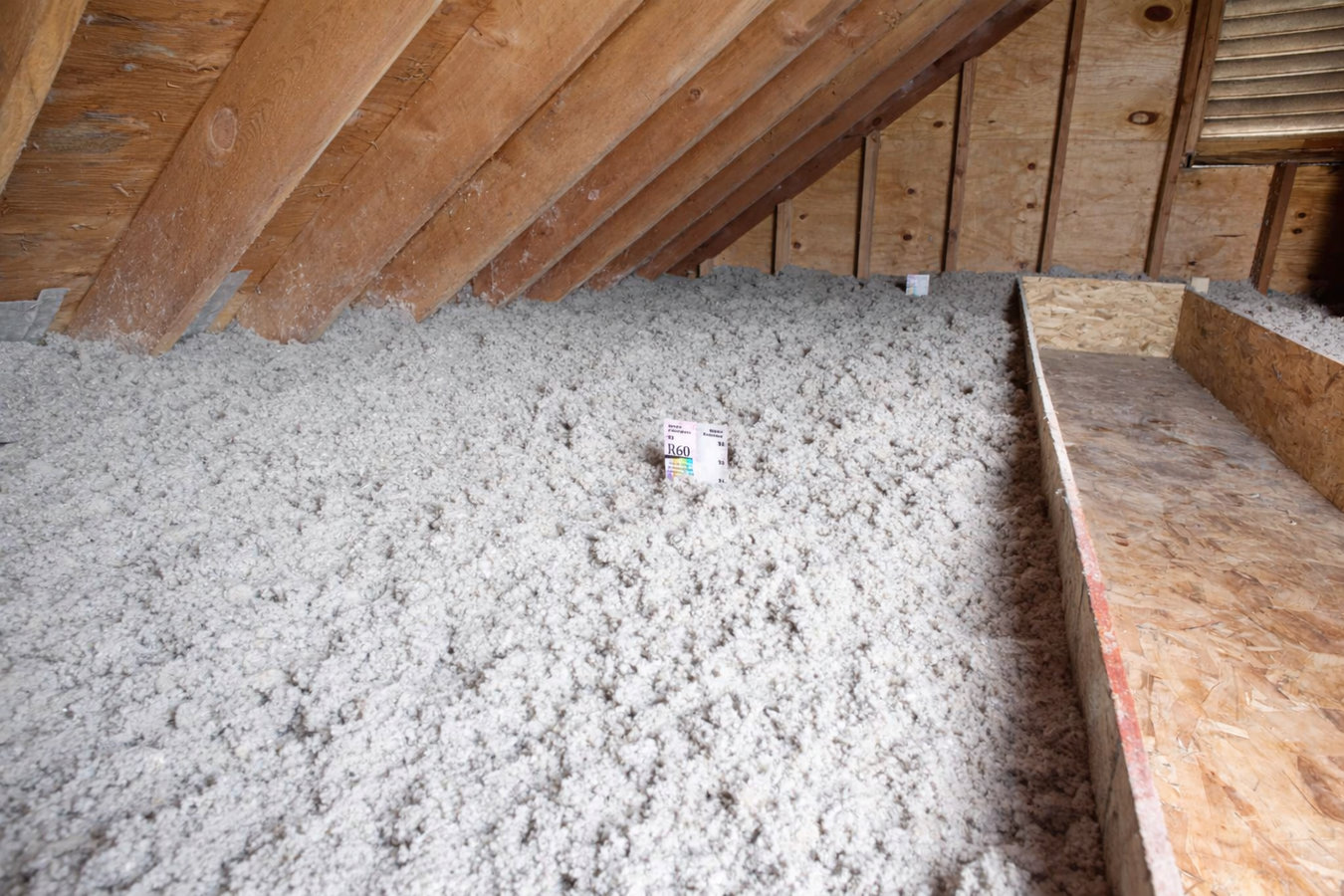
San Jacinto Insulation serves Redlands, CA with blown-in insulation, spray foam insulation, and attic insulation services suited to the city's mix of pre-1940 homes, mid-century ranch houses, and newer subdivisions. We reply within 1 business day and provide a written estimate before any work begins.
Redlands has one of the largest concentrations of pre-1950 homes in the Inland Empire, and most of those homes were never insulated to levels that are appropriate for today's energy costs. Blown-in insulation fills irregular attic spaces, works around decades-old framing and mechanical runs, and can be added through the attic hatch without opening up walls or disturbing finished interior surfaces. If your older Redlands home is costing more to cool and heat than it should, our blown-in insulation service is well suited to what these homes need.
Older Redlands homes near the historic downtown have accumulated decades of small gaps around pipes, wires, and light fixtures that allow conditioned air to escape continuously. Spray foam seals and insulates at the same time, making it particularly useful in attics and crawl spaces where air leakage is as much of the problem as missing insulation. For homes built before 1960, spray foam in the attic or crawl space often delivers more noticeable energy savings than blown-in alone.
Redlands summers regularly push above 95 to 105 degrees, and the city sits at about 1,300 feet elevation where UV exposure accelerates the breakdown of roofing materials and attic insulation alike. Victorian and Craftsman homes in the older neighborhoods often have complex attic geometries with multiple roof pitches and dormers, which require more careful coverage than a simple tract home attic. Getting attic insulation right here means accounting for those architectural details, not just blowing in product and calling it done.
Many of Redlands' older homes sit on raised foundations with crawl spaces that have never been properly insulated or vapor-sealed. The city's clay soils hold moisture through the wet season, which means crawl spaces here can accumulate humidity that migrates into floor structures and encourages wood rot over time. Crawl space insulation combined with a vapor barrier protects the floor system and improves thermal comfort from below - a step that older Redlands homes particularly benefit from.
Adding insulation to an existing Redlands home without a full renovation is exactly what retrofit insulation is designed for. The approach uses existing attic hatches, small access points, or minimally invasive wall drilling to get insulation into spaces that were never addressed during original construction. For homeowners in historic Redlands neighborhoods who want better thermal performance without disrupting their home's original character, retrofit methods are the practical path forward.
Redlands is unlike most Inland Empire cities in one important respect: a meaningful share of its housing stock predates modern insulation standards entirely. The city grew rapidly during the citrus boom of the 1880s through 1920s, and many of those homes are still in active use today. Victorian, Craftsman bungalow, and early 20th-century construction typically means wood-frame walls, original plaster interiors, and attics that may have had insulation added sporadically over the decades rather than installed comprehensively. A contractor who only works in newer suburban construction will encounter Redlands' older homes as unfamiliar territory.
Even the mid-century and newer homes on the north and east sides of Redlands face their own insulation challenges. Stucco exteriors and tile roofs hold up well in the inland heat, but clay soils shift with the seasonal wet-dry cycle, opening small gaps over time that allow both air and moisture to move through the building envelope. Redlands also sits directly in the path of Santa Ana wind events, which push hot, dry air at high pressure against homes every fall. When insulation is thin and gaps are unsealed, those wind events send that air straight through the building envelope and into living spaces.
Our team is familiar with the range of construction types across Redlands - from the Victorian and Craftsman homes near the Redlands Historic Preservation program area downtown to the stucco tract homes on the north and east sides of the city. Permit-required projects are coordinated through the City of Redlands Building and Safety Division. The older properties near the University of Redlands and Kimberly Crest are the ones we approach most carefully - original plaster, older framing, and attic spaces with non-standard dimensions mean a straightforward blown-in job requires more attention to coverage and access than it would in a newer home.
Redlands sits along the I-10 corridor in San Bernardino County, roughly 60 miles east of Los Angeles. The city has a quieter, small-town character compared to its neighbors, and residents here tend to be long-term homeowners with a strong interest in maintaining their properties. Whether a home is near the University of Redlands or out in one of the newer subdivisions to the north, we cover the full city.
We also serve neighboring San Bernardino, which sits just to the west and is where many Redlands residents work and commute, and Beaumont, which is to the south along the I-10 corridor and shares the pass-influenced climate that affects eastern San Bernardino County.
We respond to all inquiries within 1 business day. On the first call we ask a few questions about your home - age, size, and what has prompted you to reach out - so we arrive at the assessment prepared rather than starting from scratch on-site.
We inspect your attic, crawl space, or wall areas - wherever the work is needed - measure current conditions, and check for moisture or pest issues. Cost is discussed directly here: you will receive a written quote that covers exactly what will be done and what it will cost before any commitment is made.
The crew arrives, sets up equipment, and completes the work. For blown-in attic jobs, you can typically stay home throughout. For spray foam projects, you will need to leave for a few hours while the foam cures. Either way, we protect your interior surfaces and clean up before leaving.
Before we leave, we walk through the finished work and show you depth markers or coverage so you can verify the job matches what was quoted. We also provide documentation for SCE or SoCalGas rebate applications if your project qualifies - you should not have to chase that paperwork yourself.
We serve all of Redlands - from the historic homes near downtown to the newer neighborhoods on the north side. Written estimate provided before any work begins.
(951) 910-7091Redlands is a city of about 73,000 people in San Bernardino County, founded in the 1880s during the citrus farming era and widely recognized today for its well-preserved historic architecture. Few cities in Southern California have as high a concentration of Victorian and Craftsman bungalow homes still in active residential use. The neighborhoods near the historic downtown and around the University of Redlands, which has been in the city since 1907, have tree-lined streets, large lots with mature landscaping, and older hardscape like brick walkways and concrete driveways that reflect the city's age. The landmark Kimberly Crest House and Gardens, a Victorian mansion built in 1897, is one of the most recognized historic landmarks in the region and a good indicator of the architectural character that defines older Redlands neighborhoods.
The newer parts of Redlands - particularly the subdivisions on the north and east sides of the city - have a completely different character: stucco exteriors, tile roofs, attached garages, and two-story layouts typical of 1980s and 1990s Inland Empire construction. About 60 percent of Redlands homes are owner-occupied, and the city has a reputation for residents who invest in their properties for the long term rather than treating them as short-term holdings. We regularly work in nearby San Bernardino, which borders Redlands to the west and shares the same climate and general building stock characteristics for its post-WWII neighborhoods.
Expand and seal gaps with high-performance spray foam for superior air and moisture control.
Learn moreImprove energy efficiency and comfort by properly insulating your attic space.
Learn moreFast, seamless coverage using loose-fill material blown into attics and wall cavities.
Learn moreComprehensive whole-home insulation solutions tailored to your house and climate.
Learn moreSafe removal of old, damaged, or contaminated insulation before replacement.
Learn moreProtect your floors and foundation with properly installed crawl space insulation.
Learn moreReduce heat loss through exterior and interior walls with professional wall insulation.
Learn moreSeal drafts, gaps, and leaks throughout your home to stop conditioned air from escaping.
Learn moreKeep basements warmer in winter and cooler in summer with insulated walls and floors.
Learn moreHigh-density foam that delivers maximum R-value and a moisture-resistant air barrier.
Learn moreLightweight, flexible foam ideal for interior walls and hard-to-reach spaces.
Learn moreEnergy-saving insulation solutions for commercial buildings and industrial facilities.
Learn moreHeavy-duty plastic sheeting installed in crawl spaces to block ground moisture.
Learn moreProfessional vapor barrier installation to protect your home from humidity and moisture damage.
Learn moreSeal attic bypasses and penetrations to stop heated or cooled air from leaking out.
Learn moreAdd insulation to existing walls and structures without major renovation.
Learn moreWhether your home was built in 1905 or 2005, we know how to assess it properly and give you a straight answer. Call or submit a request and we will respond within 1 business day.