
Loading...
San Jacinto Insulation serves San Bernardino, CA with commercial insulation, attic insulation, and spray foam services for a city where decades of aging housing stock meet summer temperatures that regularly top 100 degrees. We reply within 1 business day and provide a written estimate before any work begins.
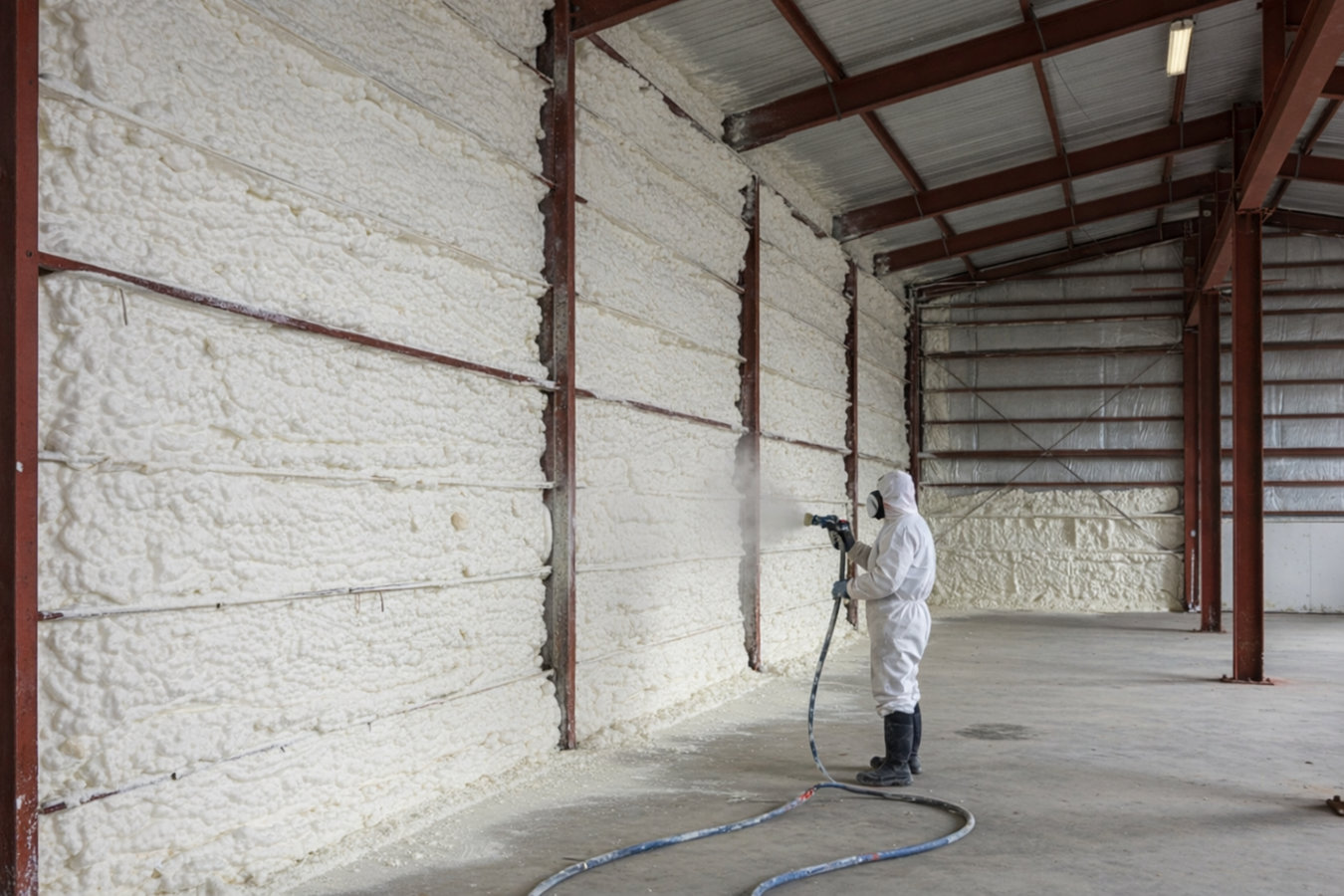
San Bernardino has a substantial commercial building stock - much of it built before the mid-1990s - and a large share of those buildings have never had an insulation upgrade. In a city where summer temperatures exceed 100 degrees Fahrenheit, that gap in the building envelope means cooling systems run at full capacity for months while operating costs climb. We handle commercial insulation for warehouse spaces, retail buildings, and office properties throughout San Bernardino. For a full overview of what this work involves, see our commercial insulation page.
A large share of San Bernardino homes were built between 1940 and 1980, when insulation standards were far lower than California requires today. In the city's valley location, which traps heat and pushes attic temperatures well above the ambient air on summer afternoons, thin or compressed original insulation means the ceiling becomes a heat radiator. Upgrading attic coverage is the single highest-return improvement most homes in this age range can get, and it is where we start almost every residential assessment.
Older homes in San Bernardino often have gaps around penetrations - pipes, wires, and roof bypasses - that were never sealed during original construction and have widened over decades of heat cycling and minor seismic movement. Spray foam seals and insulates in a single application, which is why it is the right answer for homes that have both an air-infiltration problem and an insulation-depth problem at the same time. It is particularly effective in the older custom homes in the foothills neighborhoods north of downtown.
Blown-in loose-fill is the most efficient way to add insulation depth to an existing attic without removing what is already there. In San Bernardino's postwar ranch homes, where attics are often accessible but covered with older compressed material, blown-in covers the full attic floor evenly - including the irregular spaces around HVAC ducts and mechanical runs that batts leave exposed. It is a practical, cost-effective upgrade for homeowners who need more coverage but do not want a full removal and reinstall.
Santa Ana wind events push 50 to 70 mile-per-hour gusts through the San Bernardino Valley each fall and winter. At that pressure, unsealed gaps around recessed lights, attic hatches, and wall penetrations let conditioned air out and hot or cold outside air in at a rate no insulation layer can compensate for on its own. Air sealing before new insulation is installed is the step that makes the finished job perform the way it should - and it is what separates a quality installation from one that just looks complete.
San Bernardino is a city of about 222,000 people at the base of the San Bernardino Mountains, with elevations ranging from around 1,000 to 1,500 feet across most of the city. It is the county seat of San Bernardino County, the largest county by area in the contiguous United States. The valley location traps summer heat, and temperatures regularly reach 100 degrees Fahrenheit or higher from June through September. That sustained heat is the primary insulation challenge for both residential and commercial properties here - poorly insulated buildings drive cooling systems to run at full capacity for months at a time, pushing energy bills well above what properly insulated buildings would pay. The Santa Ana wind events that arrive in the fall add a secondary challenge, pushing outside air through every unsealed gap in a building's envelope.
The majority of San Bernardino's housing stock was built between 1940 and 1980 - single-story stucco ranch homes on concrete slab foundations, built to insulation standards that California has since raised substantially. Many of these homes have been owner-occupied for decades, which means deferred maintenance and aging systems are common. The city also has a large share of renter-occupied properties, where insulation upgrades often lag even further behind. In the foothills neighborhoods to the north, closer to areas near California State University, San Bernardino and the slopes leading into the national forest, older custom homes with wood framing present their own set of insulation considerations that differ from the standard postwar ranch stock found in the rest of the city. For any building in San Bernardino, the combination of age and climate makes insulation upgrades one of the most direct ways to reduce ongoing operating costs.
When projects require permits, we work with the San Bernardino County Land Use Services Building and Safety Division as well as the City of San Bernardino permitting office depending on the project location. The buildings we see most often here are postwar ranch-style homes on slab foundations with stucco exteriors - a housing type that shows up consistently across most of the city's residential neighborhoods. In the foothill areas to the north, we encounter older wood-frame homes that are less common in the flatter neighborhoods closer to downtown, and those require a different assessment approach.
San Bernardino is a city most people in the Inland Empire know by its position along Interstate 10 and Interstate 215, its role as the county seat, and landmarks like Historic Route 66, which runs through the heart of the city. The homes along those older corridors near downtown are some of the most under-insulated in the Inland Empire - built when energy efficiency was not yet a design priority - and they represent a significant share of the insulation work we do in this city.
We also regularly serve nearby Moreno Valley, which shares San Bernardino's valley heat and has its own large stock of tract homes that benefit from insulation upgrades, and Redlands, directly to the east with its mix of historic and newer neighborhoods.
Reach out by phone or through the contact form and we reply within 1 business day. We ask a few basic questions - the type of property, approximate size, and what has been prompting you to call - so we can come prepared to the site visit.
We inspect the property in person before quoting - measuring what is already there, checking for moisture or pest damage, and identifying air-sealing needs. The estimate you receive is written, itemized, and addresses whether a permit is required for your specific project. We do not give meaningful prices over the phone for jobs we have not seen.
For commercial projects and any residential work that requires one, we pull the permit before work begins. This protects you and ensures the work meets California energy standards. Permit approval typically adds a few days to the timeline - we factor that in when scheduling so there are no surprises.
The crew air-seals first, then installs insulation to the specified depth. Most residential attic jobs in San Bernardino finish in a single day. Before leaving, we walk you through what was done so you can see the finished coverage. For commercial work with a permit, we coordinate the inspection with the relevant authority - you receive a copy of the passed inspection report.
We serve San Bernardino and the surrounding Inland Empire. Written estimates, no obligation, and replies within 1 business day.
(951) 910-7091San Bernardino is one of the largest cities in the Inland Empire, with a population of about 222,000 and a history that reaches back to the Route 66 era. The city sits at the base of the San Bernardino National Forest, which borders the city to the north and east and is visible from most neighborhoods. The residential neighborhoods closest to the foothills - including the areas near California State University, San Bernardino on the north side of the city - tend to have larger lots and older custom-built homes, some dating to the early 1900s. Closer to downtown and through the central and southern parts of the city, single-story stucco ranch homes on concrete slab foundations dominate the landscape - the characteristic postwar housing stock that defines most of the Inland Empire. The city is also a major logistics hub, with key freight routes running through on Interstate 10 and Interstate 215, connecting the Los Angeles Basin to the rest of the country. This transportation role has shaped neighborhoods near those corridors, which include a mix of residential, industrial, and commercial uses.
San Bernardino borders several communities we serve regularly. To the southeast, Redlands is a neighboring city along Interstate 10 with its own stock of historic and newer homes. To the southwest, Moreno Valley is a growing city with significant residential development that shares the same valley heat. Whether your property is in a foothill neighborhood, near downtown, or in one of the residential areas along the freeway corridors, the insulation challenges in San Bernardino are consistent - aging materials, high summer heat, and buildings that were not built with today's energy standards in mind.
Expand and seal gaps with high-performance spray foam for superior air and moisture control.
Learn moreImprove energy efficiency and comfort by properly insulating your attic space.
Learn moreFast, seamless coverage using loose-fill material blown into attics and wall cavities.
Learn moreComprehensive whole-home insulation solutions tailored to your house and climate.
Learn moreSafe removal of old, damaged, or contaminated insulation before replacement.
Learn moreProtect your floors and foundation with properly installed crawl space insulation.
Learn moreReduce heat loss through exterior and interior walls with professional wall insulation.
Learn moreSeal drafts, gaps, and leaks throughout your home to stop conditioned air from escaping.
Learn moreKeep basements warmer in winter and cooler in summer with insulated walls and floors.
Learn moreHigh-density foam that delivers maximum R-value and a moisture-resistant air barrier.
Learn moreLightweight, flexible foam ideal for interior walls and hard-to-reach spaces.
Learn moreEnergy-saving insulation solutions for commercial buildings and industrial facilities.
Learn moreHeavy-duty plastic sheeting installed in crawl spaces to block ground moisture.
Learn moreProfessional vapor barrier installation to protect your home from humidity and moisture damage.
Learn moreSeal attic bypasses and penetrations to stop heated or cooled air from leaking out.
Learn moreAdd insulation to existing walls and structures without major renovation.
Learn moreCall San Jacinto Insulation or request a free written estimate - we serve San Bernardino and the broader Inland Empire.